Designing the future with digital data
Data-driven economy is one of the key trends of 2020s, and the digital world is redesigned by data. We see the results every day in social media and other websites with personalized content and ads. Considering the health and wellbeing business, data offers major opportunities to build personalized solutions that help people to stay healthier and happier. I sat down with our inspirational speaker Minna Hendolin from Sitra to discuss data and its possibilities in healthcare.
“There is a need to radically redesign how we deliver practice and think about health care”, she states and continues: “The changing demographics and demands challenge the health care sector from the reactive model that we’re actually still in. Unfortunately, health still lags behind other sectors in harnessing digital transformation, the potential of data and advanced technologies. This means missing the opportunity to save a significant number of lives and even billions of euros of business.”
This means missing the opportunity to save significant number of lives and even billions of euros of business.”
Minna Hendolin, Sitra
Even though digital health and data provide a world of opportunities, health data is considered sensitive. It can be associated with leaks and hacking. Individuals, organizations, and society must take data protection and privacy seriously in order to create successful and reliable systems.
“The term sensitive data, it’s not only about health. All data that you can link to a personal identity is sensitive. People have been quite open to give the data in social media or when they are buying things. As a user or customer you should be able to know, and hopefully be a co-architect in determining when it’s used”, Hendolin sums up. She calls for data literacy: “Every person should have an understanding of where my data is, how it is used, how can I manage my data. The ethical but is that not everybody has the capability or interest for that. What is the responsibility of organizations, and how much can be regulated and legislated by the society?”
Bring in the right partners
When creating new solutions in wellness and healthcare, the ideal is to involve the right people. This means both service providers and companies and their customers and users. A multidisciplinary approach is needed to be able to combine expertise in different areas. Ecosystems are an important phenomenon in health and wellbeing business, and one element that brings them together is sharing data.
“In an ecosystem there is a possibility for different parties to work together by co-creating and developing together. They share data and expertise, finding solutions for the unmet needs. Ecosystem is a catalyst for innovation and business growth”, Minna Hendolin explains. She mentions as an example the CleverHealth Network, an ecosystem in healthcare sector that brings together almost 20 partners from medical and tech companies to public institutions.
Ecosystem is a catalyst for innovation and business growth.”
Minna Hendolin, Sitra
Never forget the real people
When developing new digital solutions, it is important to keep in mind the real people. How do they benefit and what does our solution offer? In the end, the value to customers is the only thing that matters. The winning concept combines a human-centric approach, networks, and digitalization.
“If you think about digital platforms and data services solutions, the problem is that we have so many channels, making us totally confused. Winners are those, who can combine different channels or interfaces. How can I bring value to the customer, and where does that value come from?” Minna Hendolin contemplates. “Then, we come back to data ecosystems. Can I create better solutions by combining data from several sources and add value to all partners in my ecosystem by sharing data in a fair way?”
Hendolin also highlights the evolving altruism in society. “It means that you are ready to share your data, for instance. Without getting any reward, for good purposes. How is this really changing the way services and business models develop?”
Towards a healthier tomorrow
The world has changed during the COVID-19 pandemic, forcing people to stay home and avoid contact with people outside their family members. Digital solutions are needed everywhere. To this point, managing with the complex pandemic situation has required resilience on a personal stage. On the other hand, foresight and data-based management on a societal scale have been discussed maybe more than ever. Is it possible to build a better tomorrow with data?
“We are able to build a more resilient and sustainable society with data. We are more prepared when we understand things better”, Hendolin says. “By building society and healthcare with data, it is possible to create personalized services for people, that are time and location independent. Data enables better policies and better decisions. This helps allocating the limited resources where they are needed and to emphasise the prevention of problems.”
By building society and healthcare with data, it is possible to create personalized services for people, that are time and location independent.”
Minna Hendolin, Sitra
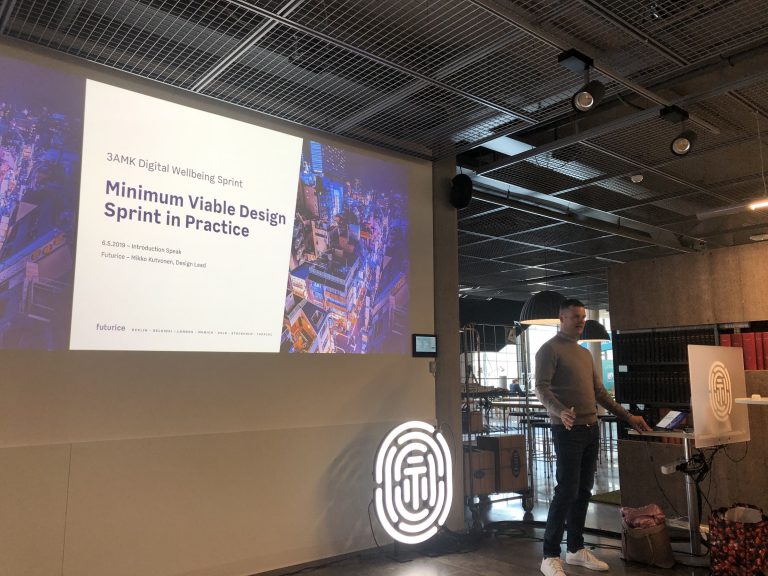
In both private and public sector, services are designed by people for people. In the era of data economy and rapid technological progress, it is easy to get confused. “Never forget the consumer, the people, the persons. You can make them involved”, Minna Hendolin advises. As Digital Wellbeing Sprint approaches, this message is important to keep in mind.
Text: Johanna Hentunen, Master Student in Service Design, Laurea UAS